βœ‰οΈ Not subscribed yet? Subscribe to the Newsletter

Future of Coding Weekly 2025/11 Week 4

2025-11-24 11:33

πŸŽ™οΈ TodePond and Dave Ackley 🎼 Thuja: Algorithmic composition with Csound πŸ§‘β€πŸ’» OpenAI constrained generation with Context‑Free Grammar

Share Your Work

πŸ—¨οΈ Mariano Guerra: πŸŽ₯ Visual WebAssembly Demo: A Structure Editor for Wasm Modules

🧡 conversation @ 2025-11-18

Demo of a prototype I'm working on to play with structure editors and ways to make WebAssembly easier to understand.

Visual WebAssembly Demo: A Structure Editor for Wasm Modules

πŸ—¨οΈ Mariano Guerra: πŸ“ A WebAssembly interpreter (Part 1)

🧡 conversation @ 2025-11-20

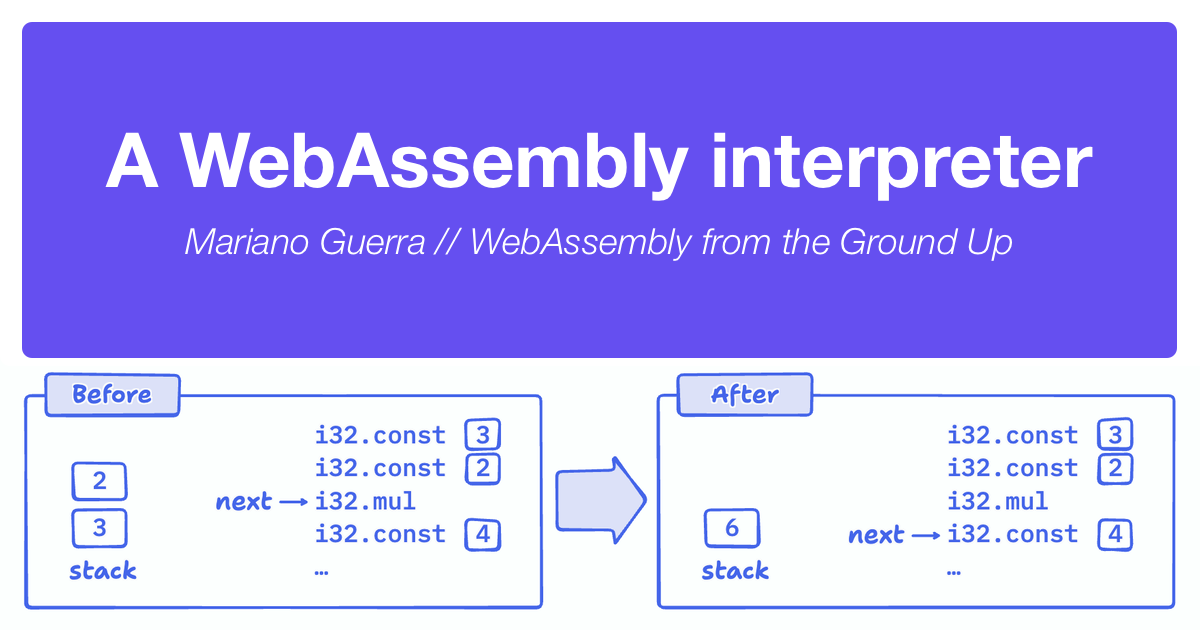
We build up a simple interpreter from scratch, in JavaScript, for a small subset of Wasm instructions (arithmetic and comparison).

Implementing a Wasm Interpreter to explore its design and semantics

A WebAssembly interpreter (Part 1)

πŸ—¨οΈ TodePond: πŸŽ™οΈ TodePond and Dave Ackley

🧡 conversation @ 2025-11-20

hi everyone i recorded a podcast episode with Dave Ackley where we talk about robust first computing and jamming
https://www.pastagang.cc/podcast/runrecord.mp3

DevLog Together

πŸ—¨οΈ Charlie Roberts: πŸ“ teeny

🧡 conversation @ 2025-11-17

on a related note to what Mariano Guerra posted, here’s a little editor library I made using css highlights https://codeberg.org/charlieroberts/teeny

simple demo: https://charlieroberts.codeberg.page/teeny/demos/js/
demo in a wasm audio playground: https://gibber.cc/genish/playground/

A small code editor for live coding performances

teeny

πŸ—¨οΈ Ben: 🎼 Thuja: Algorithmic composition with Csound

🧡 conversation @ 2025-11-19

I've been iterating on docs and implementing a realtime / livecoding interface in my algorithmic composition library Thuja. I can actually do a live session now πŸ™‚ but as I practice with the interface I find ways to improve it, so it's still in major flux.
I'm searching for the right tone in the docs - the readme seems simplistic (musically) to me - next step for me is to walk through some of my pieces cookbook-style, laying out more elaborate use cases.

Thinking Together

πŸ—¨οΈ maf

🧡 conversation @ 2025-11-17

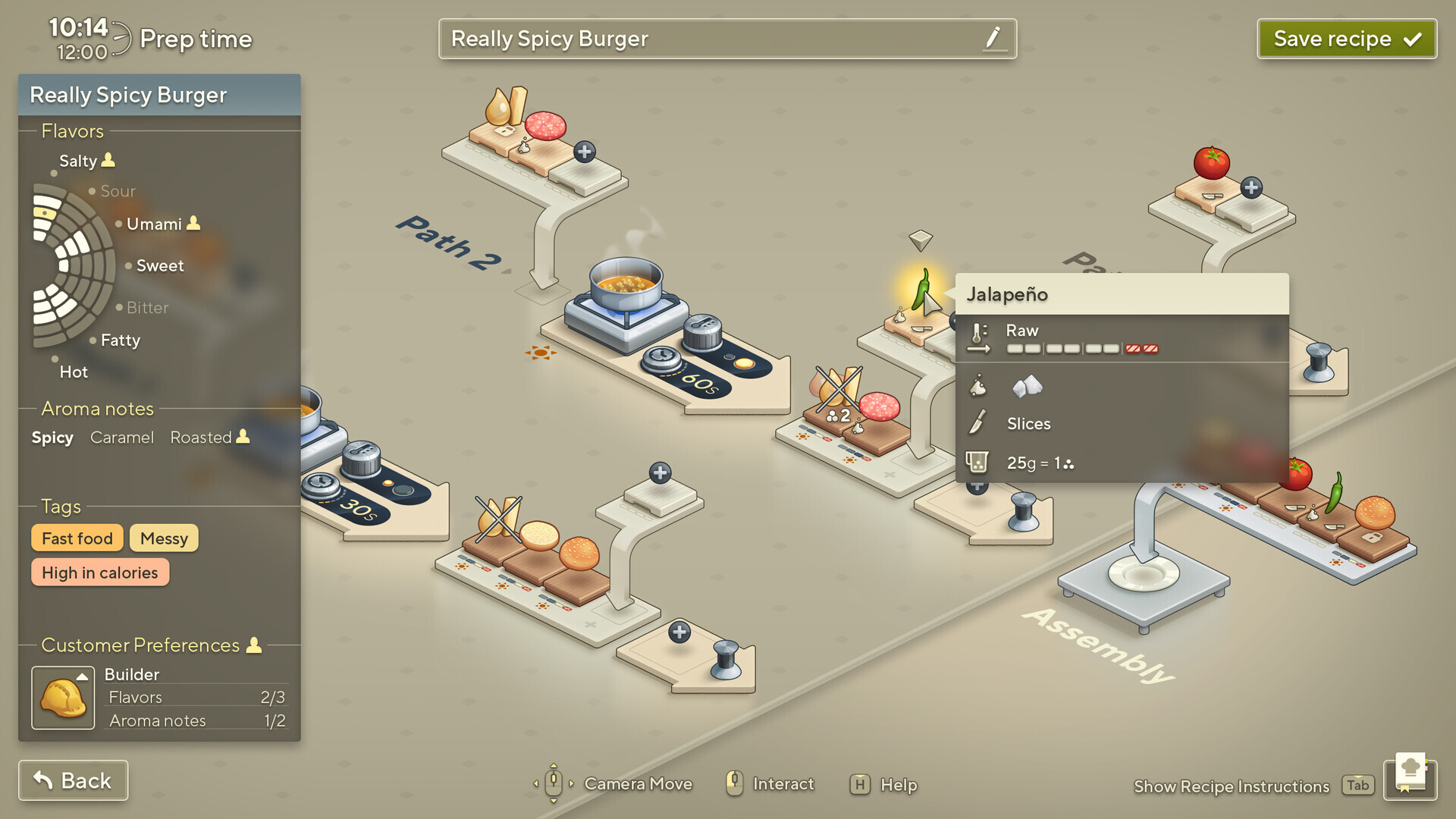
Cooking recipes are like little algorithms. One of my friends made a UI mockup for a visual recipe design tool. It was done for a game, but maybe something like this could be used for regular algorithms. Sharing for inspiration.

πŸ“· cooking_simulator_ui.jpg

πŸ—¨οΈ guitarvydas: πŸ“ Show Don’t Tell

🧡 conversation @ 2025-11-22

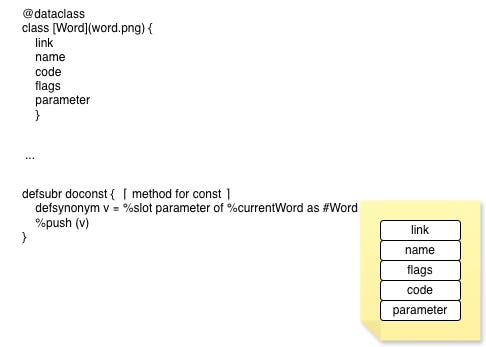
Can we extend the definition of structures, like @dataclass in Python, to include links to .png (and .svg?) files? Then, use IntelliSense to show the picture? Something like this

Show Don’t Tell

AI

πŸ—¨οΈ Tom Larkworthy

🧡 conversation @ 2025-11-17

Oh OpenAI finally offered constrained generation e.g. supply the regex the output should match (something llama.cpp had). I get much better results for coding LLM if the output is XML, so now I can have a custom too output valid XML trivially.

πŸ§‘β€πŸ’» OpenAI constrained generation with Context‑Free Grammar


πŸ‘¨πŸ½β€πŸ’» By 🐘 @[email protected] 🐦 @warianoguerra

πŸ’¬ Not a member yet? Check the Future of Coding Community

βœ‰οΈ Not subscribed yet? Subscribe to the Newsletter / Archive / RSS

πŸŽ™οΈ Prefer podcasts? check the Future of Coding Podcast
Future of Coding Weekly 2025/11 Week 3

2025-11-17 00:35

πŸ“ Explorable explorable explanations πŸ’‘ SYNIT: a reactive operating system πŸ“ Open Source Power

Share Your Work

πŸ—¨οΈ Murat Kasimov:

🧡 conversation @ 2025-11-12

Hello everyone! I was discovering how documentation for a programming language could look like - I came with my own engine for Π― where you can click on every token in code snippets and follow it. As a demonstration, there are first 6 chapters on polished step-by-step tutorials demonstrating designing a command line task manager: https://muratkasimov.art/Ya/Tutorials/. And here is an example with deconstructing an regular operator: https://muratkasimov.art/Ya/Operators/kyokl/.

πŸ—¨οΈ Nilesh Trivedi: πŸ“± Qwikbuild AI - Build your App in 7 minutes on WhatsApp

🧡 conversation @ 2025-11-12

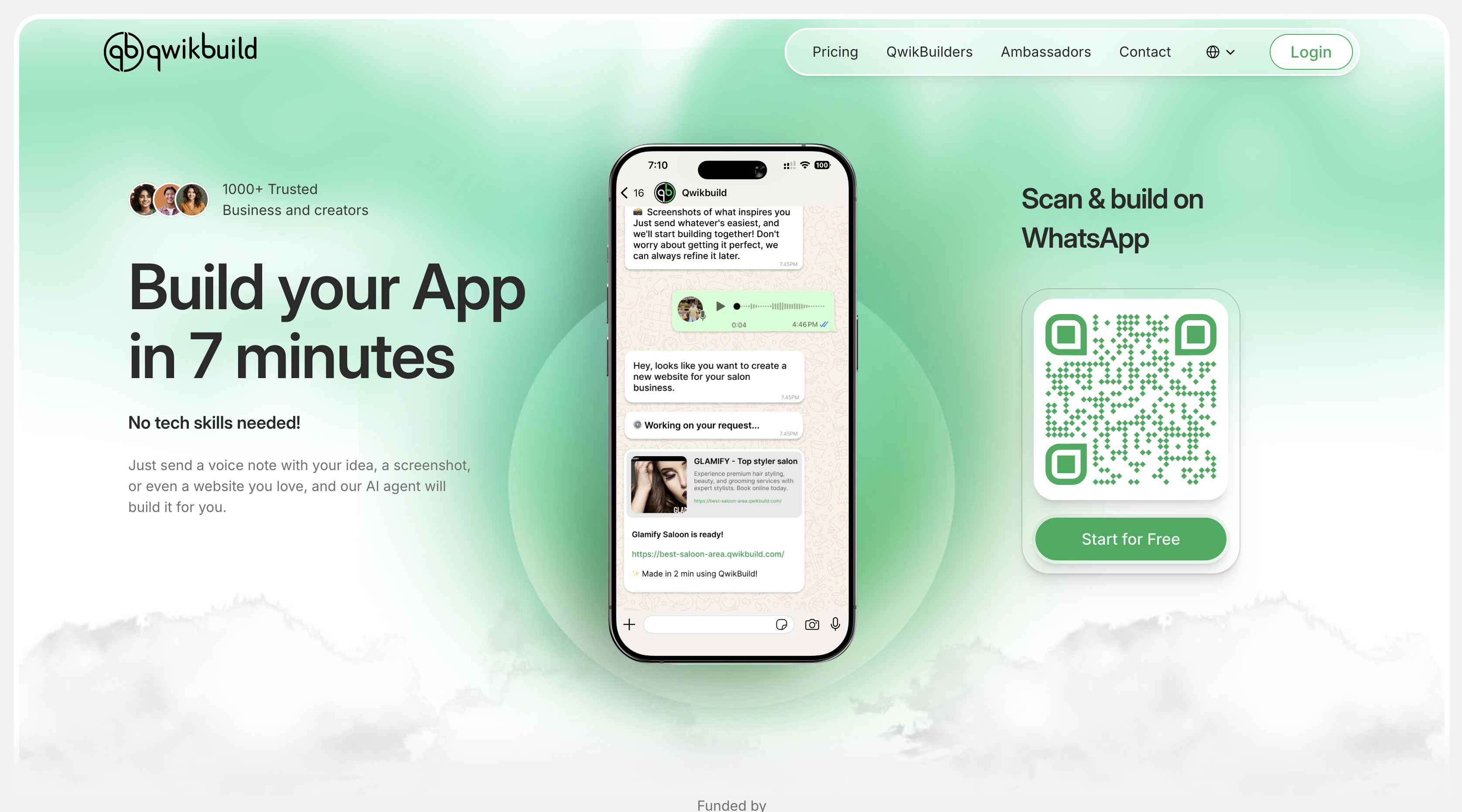
Hey folks, this is what I have been working on for past few months: https://qwikbuild.com

The way I like to explain this to technical folks is: it is an AI coding agent not for you but for your friends and family members who likely are mobile-native, and tend to have much higher expectations from AI when it comes to building ready-to-use and full-featured web apps. πŸ˜€

Feedback and brickbats are welcome! πŸ™

πŸ“± Qwikbuild AI - Build your App in 7 minutes on WhatsApp

Turn your creative ideas into professional websites and apps instantly. Send a voice note, screenshot, or example via WhatsApp, and our AI builds your site in minutes with stunning precision. No coding required.

Qwikbuild AI - Build your App in 7 minutes on WhatsApp

πŸ—¨οΈ Konrad Hinsen: πŸ“ Explorable explorable explanations

🧡 conversation @ 2025-11-13

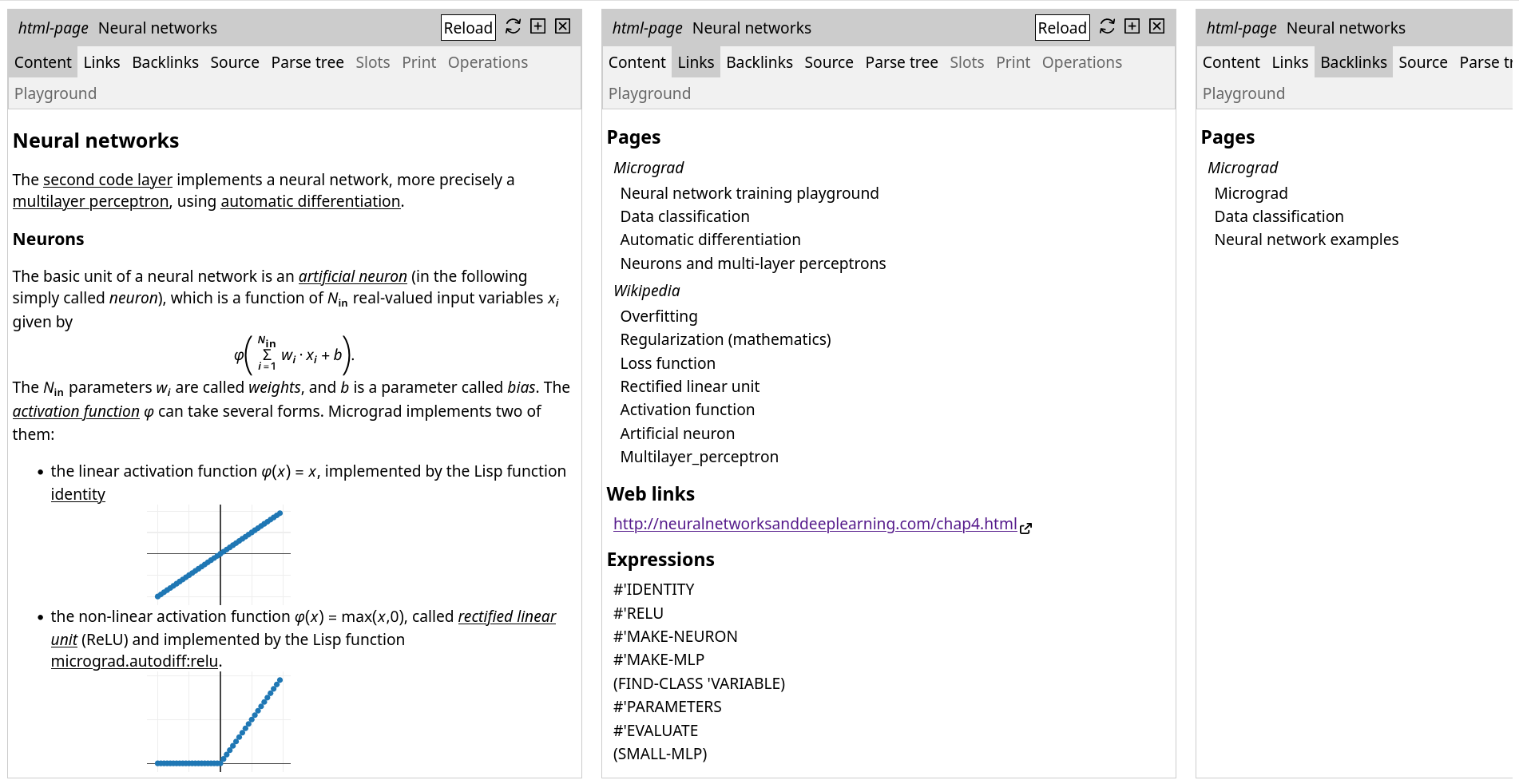
Here's a blog post placing my HyperDoc project in the context of Bret Victor's "explorable explanations", with Micrograd supplying the illustrations: Explorable explorable explanations

DevLog Together

πŸ—¨οΈ Mariano Guerra: πŸŽ₯ Performant Syntax Highligting with CSS.highlights API and OhmJs

🧡 conversation @ 2025-11-14

Quick overview showing how to generate small and performant syntax highlighting for your own programming languages using OhmJs and the new CSS.highlights API

πŸŽ₯ Performant Syntax Highligting with CSS.highlights API and OhmJs

Performant Syntax Highligting with CSS.highlights API and OhmJs

Linking Together

πŸ—¨οΈ Jasmine Otto:

🧡 conversation @ 2025-11-11

New public release of Apptron, a local-first IDE and Linux environment.
https://github.com/tractordev/apptron/releases/tag/v0.5.0

Apptron is the first of a new category of general-purpose compute platform with over 5 years of R&D behind it. In these early releases, Apptron is starting out as a humble, local-first IDE. It is a development environment powered by Wanix, a new Plan 9 inspired runtime for WebAssembly, which allows you to run Wasm and x86 programs in a full Linux environment that works entirely in the browser without cloud compute.

πŸ—¨οΈ shalabh: πŸ’‘ SYNIT: a reactive operating system

🧡 conversation @ 2025-11-13

Found this evolution of the syndicated actors model: https://synit.org/

an experiment in applying pervasive reactivity and object capabilities to the System Layer of an operating system

Interesting stuff, specially if you ever found actors, tuplespaces, or reactive models interesting. You can see a summary of the syndicated actors here: https://synit.org/book/syndicated-actor-model.html

πŸ—¨οΈ Ivan Reese: πŸ“ Open Source Power

🧡 conversation @ 2025-11-14

This is a good read about how to interpret what is meant by "open source"

Pullquote:

This definition of open source prohibits discriminating against megacorps and nazis. That's a problem for me.

πŸ“ Open Source Power

We have to talk about open source licensing.

Open Source Power


πŸ‘¨πŸ½β€πŸ’» By 🐘 @[email protected] 🐦 @warianoguerra

πŸ’¬ Not a member yet? Check the Future of Coding Community

βœ‰οΈ Not subscribed yet? Subscribe to the Newsletter / Archive / RSS

πŸŽ™οΈ Prefer podcasts? check the Future of Coding Podcast

Future of Coding Weekly 2025/11 Week 2

2025-11-10 11:53

🧠 micrograd πŸŽ₯ I am not dead yet πŸ“ The Hidden Gem in S/SL: Why Dataless Languages Matter

Share Your Work

πŸ—¨οΈ Konrad Hinsen: 🧠 micrograd

🧡 conversation @ 2025-11-03

Micrograd: a pedagogical implementation of neural networks using a reverse-mode automatic differentiation engine.
https://hyperdoc.khinsen.net/94FE4-micrograd

I have written this as a real-life example of explorable explanations in HyperDoc, my framework for explainable software systems which I demoed at a meetup earlier this year. The main new features in the platform that are showcased are interactive tools and much-improved playgrounds for free exploration.

Feedback welcome at https://codeberg.org/khinsen/micrograd (the source code repository), or right here of course.

πŸ“ micrograd

A tiny scalar-valued autograd engine and a neural net library on top of it

micrograd

πŸ—¨οΈ Ivan Reese: πŸ“ The Hidden Gem in S/SL: Why Dataless Languages Matter

🧡 conversation @ 2025-11-08

New blog post: πŸ“ The Hidden Gem in S/SL: Why Dataless Languages Matter

Excerpt:

In this article, I want to discuss my main inspiration from S/SLβ€”a 1970s compiler construction language that most programmers have never heard of, but which demonstrates something fundamental about separating architectural thinking from implementation details.
What is S/SL?
S/SL stands for Syntax/Semantic Language. It was designed for writing compilersβ€”specifically the parts that parse input, analyze semantics, and generate code.
Here’s what makes it unusual: S/SL has no data definitions. You can’t declare integers, strings, arrays, or records.

πŸ—¨οΈ Tom Larkworthy:

🧡 conversation @ 2025-11-08

Kartik asked at some point whether Lopecode could do offline note taking. Sort-of but you would have to remember to export every change or lose you notes and the frequent exports would generate a new file every time cluttering the HDD up.

So I have made a note-taking app that uses IndexDB via dexie.js to remember the work in progress. If you have two tabs open the notes are synced in realtime. The Notes in indexdb are carried forward on export as an inline file attachment to the single HTML file application.

Export now support themes so this is the first dark mode version πŸ‘». Its looks amazing now (CSS taken from ISC licensed NotebookKit and credited).

Obviously if you use it from the web link it will use network so if you wanted to use it you would click download and use it from your computer for true offline. Tested in Chrome/Firefox/Safari and works, but Safari might delete the indexdb data after 7 days (maybe not though if its a file:// ?) There is a technical overview inside the notebook as its meant for demonstration over actual utility
https://tomlarkworthy.github.io/lopecode/notebooks/@tomlarkworthy_notes.html

sidenote: I wrote this slack message earlier in the day, decided not to send it coz there was a bug, recorded the draft message in notes, fixed the bug and pushed, and now the Github.io one now has this very slack message. I kind of like it coz its like an intro anyway, but a bit of a risk for me who publishes notebooks that I might accidentally transmit sensitive information.

πŸ—¨οΈ TodePond: πŸŽ₯ I am not dead yet

🧡 conversation @ 2025-11-09

hello everyone i gave a talk about live programming, and what "liveness" means

πŸŽ₯ I am not dead yet

I am not dead yet

Thinking Together

πŸ—¨οΈ Ivan Reese:

🧡 conversation @ 2025-11-06

What are the all-time great projectional / structure editors? I'm particularly interested in:

  • tight focus on a specific language
  • really good autocomplete / hinting (ie: type-aware, don't show me unhelpful stuff at all)
  • pulling far away from the feel/experience of raw text typing, pushing toward "press a button, out comes exactly the program you wanted"

πŸ—¨οΈ josharian:

🧡 conversation @ 2025-11-06

An esolang idea that might (?) be fun to kick around.

The idea is to take advantage of the fact that LLMs are somewhat resilient in their inputs (can ignore typos, infer intent, etc.) to have a multi-level language.

Here’s a sketch, but I’m not wedded to any of it:

Programs are UTF-8. Each input code point is interpreted as an opcode. (Many opcodes are no-ops, probably most non-ASCII code points.) Some opcode(s) cause LLM execution of the program text.

The fun is writing a program whose opcodes do something useful, while still being natural-language-interpretable enough to use the second-level interpretation of the language as well.

(For the no-LLMs crowd, a similar idea is to have a pixel-based programming language…but the input is always pixels from rendering a textual program. Then you can execute either the pixels, or the text from which the pixels result, and bounce between the two.)

πŸ—¨οΈ Ivan Reese:

🧡 conversation @ 2025-11-08

On Mastodon, maf shared the following discussion prompt:

[at 32m in the talk Hackover 2025 - Patterns in Chaos: How Data Visualisation Helps To See the Invisible, the speaker yote]…

brings up an interesting thought re readable visual design - that visualizations should encode the important variables using features that we've evolved to recognize instantly - on the most primitive level. The example given is rather simple: large vs small... But if we pull this a little further, it might lead us to some interesting, totally not explored visualizations:

  • using familiar vs unfamiliar faces as data points
  • using movement (especially movement of complex foreground against complex background) to highlight key area
  • proximity (stereoscopic images) - this could be combined with movement, so that important points move back & forth
  • we're really good at predicting trajectories of thrown objects - can this be utilized somehow?

Linking Together

πŸ—¨οΈ maf:

🧡 conversation @ 2025-11-04

I didn't expect that. At first sight it seemed to be AI generated but under further inspection turned out to be totally legit. Nice find.

The linked page lists a couple innovations that are introduced. Domains & overlaps is an interesting technique that blends static & dynamic typing. "Memlets" provide a primitive for maintaining state. A simple, universal & also flexible mechanism for merging multiple concurrent processes back into a single thread of execution... Something tells me that the author has some experience working with dataflow languages and is addressing the main pain points.

There is also a PDF with a spec of the language that can be downloaded for free from a couple online stores. I've scanned through it quickly.

It's a fairly technical academic approach that starts with a definition of a language.

It's also pretty comprehensive - covers semantics, execution model, graphical display, programming interfaces. IMO such a priori design doesn't work well in visual space. It's hard to predict what elements will turn out to be annoying and which will create unexpected synergies. But if this language gets actually implemented and undergoes a couple iterations... Who knows... I'll be watching it's development with great interest!

πŸ—¨οΈ Christopher Shank:

🧡 conversation @ 2025-11-04

"Disability Driven Development" from the Damaged Earth Catalog

Disability Driven Development (DDD) is a practice that reimagines computing from a disabled perspective, challenging its seemingly seamless and stable hegemonic operations. It asks who is left out of creating (and joyfully using) digital technology, and how this can be changed. It is a practice by and for those who did not get to shape computing to meet their needs.

Currently computing is stuck in a catch-22: while nobody is better qualified to create access solutions than disabled people themselves, systemic oppression and exclusion result in a situation where those with access needs rarely have the resources to envision or implement those solutions. The history of disability justice demonstrates an abundance of curb-cut effectsβ€”situations where focusing on access for one group, yields ideas, changes and solutions that are beneficial to many more people than those in the group the changes were originally meant for.

DDD addresses barriers of access to programming, which relies heavily on text, specifically the English language and the Latin alphabet, with specialized 'languages' that are structured in very specific ways. If that weren't enough of a barrier, the programming world deals with a deeply entrenched bigotry. The resulting lack of access to programming reduces the quality of software, since the creativity involved in thinking about computing through a disabled and trans*computational lens is excluded, denying disabled and other people the quality of life that software could help them achieve.

πŸ—¨οΈ Mattia Fregola: πŸ‘Ύ Dithering - Part 1

🧡 conversation @ 2025-11-09

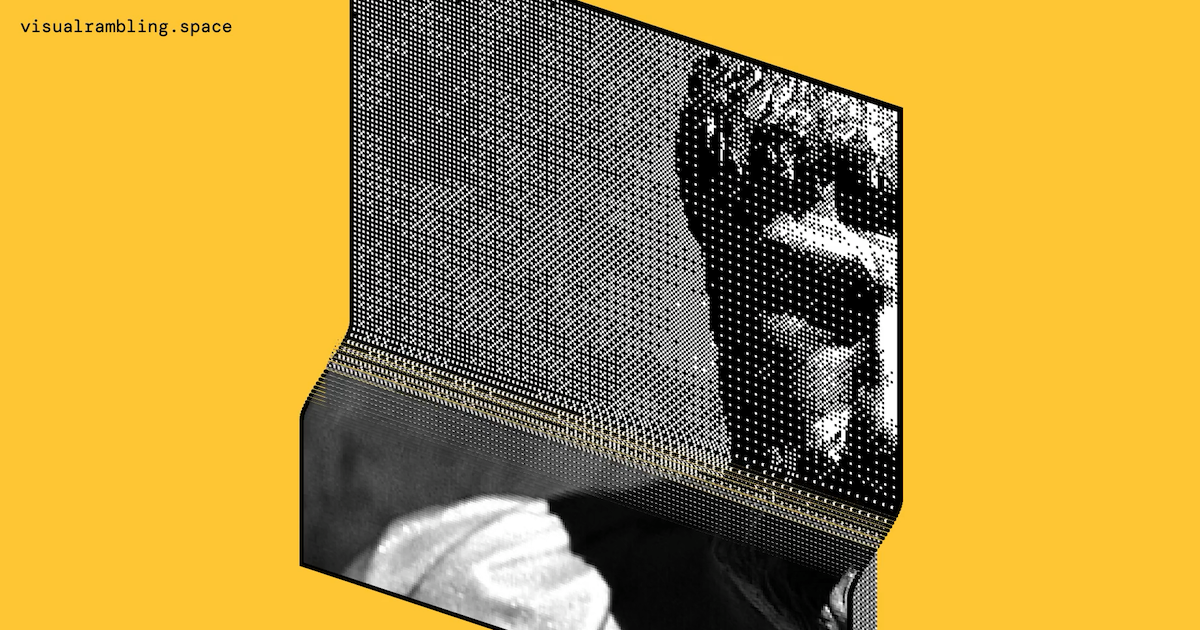
Great virtual story on dithering

Understanding how dithering works, visually.

Dithering - Part 1

Present Company

πŸ—¨οΈ Daniel Harris:

🧡 conversation @ 2025-11-06

MozFest Barcelona 2025 November 7-9! Anyone from Festival Of Confusion (that's here/us/we!) attending MozFest? Let's meet up! And if not MozFest what events are you attending over the next 6 months? That's 2 questions in one thread: hence the Confusion! πŸ˜‰


πŸ‘¨πŸ½β€πŸ’» By 🐘 @[email protected] 🐦 @warianoguerra

πŸ’¬ Not a member yet? Check the Future of Coding Community

βœ‰οΈ Not subscribed yet? Subscribe to the Newsletter / Archive / RSS

πŸŽ™οΈ Prefer podcasts? check the Future of Coding Podcast

Future of Coding Weekly 2025/11 Week 1

2025-11-03 13:54

Two Minute Week

πŸ—¨οΈ Kartik Agaram:

🧡 conversation @ 2025-10-31

A little experiment with scrollbars

πŸŽ₯ scrollbar

Share Your Work

πŸ—¨οΈ When Leggett: πŸ“ for Server User-Agents

🧡 conversation @ 2025-10-30

So I spent most of last week in Mountain View for the 41st Internet Identity Workshop. While I was there, I was advocating for something that I've been calling Server User-Agents, and I think they're a fundamental missing piece of architecture

This week I spent time putting my notes and conversations together and wrote a deep article about the concept, although it is still very early and intentionally a loose sort of spec. Its more a call for participation.

https://its.whenthetimeca.me/p/for-server-user-agents

πŸ“ for Server User-Agents

Notes from the 41st IIW

for Server User-Agents

πŸ—¨οΈ When Leggett:

🧡 conversation @ 2025-10-30

I think its relevant to this community too, although maybe a little outside the center

πŸ—¨οΈ Eli:

🧡 conversation @ 2025-10-31

Here is a little work in progress snippet of a thing. It applies a heat map kinda color scheme to git diffs, the idea being that its rules can be tuned to call out places in the code that need closer attention when reviewing the diff. The rules are very much still a work in progress, and I'm super duper open to suggestions for ways to approach creating these rules.

Rambling video, be warned. I apologies for having the crunchiest, noisiest mouse wheel ever in the history of the recorded universe. Its like an ASMR halloween nightmare.

πŸŽ₯ video

DevLog Together

πŸ—¨οΈ Tom Larkworthy:

🧡 conversation @ 2025-11-01

Notebook kit ships with themes, so I can reuse them for the Lopebook. I think they look better than the original!

Happy about how they are implemented, they use CSS imports, which resolve through es-module-shims, so I can serve them locally, and fallback to network. This means the local file includes just the current theme, and you do a network fetch only when changing themes, keeping the bundle size small and local-first.
Also thanks to the magic of es-module-shims, the CSS is fetched directly from Github raw URLs, as I can switch the content-type to test/css programatically. es-module-shims is so powerful for local-first stuff.

πŸŽ₯ styles

Linking Together

πŸ—¨οΈ Tommy Palmer: πŸ“ Everything Is Television

🧡 conversation @ 2025-10-29

I’m a bit of a lurker here (can’t even remember if I did an intro post) but I thought people might like this πŸ“ Everything Is Television

A theory of culture and attention

πŸ—¨οΈ guitarvydas:

🧡 conversation @ 2025-10-30

a bunch of links to various books about smalltalk, maybe of interest (to me, part 4 of the blue book is quite interesting)

πŸ—¨οΈ Konrad Hinsen: πŸŽ₯ PROG Rock: Listening to old Lisp code

🧡 conversation @ 2025-10-30

PROG Rock: Listening to old Lisp code

πŸ—¨οΈ Jon Tran: πŸ“ Five Pillars of Pipe

🧡 conversation @ 2025-10-31

πŸ—¨οΈ Ivan Reese:

🧡 conversation @ 2025-10-31

Folks who came out to the SF meetup, and others besides, might find this new pseudo-rebirth of cohost as a bunch of federated websites intriguing. I certainly do.

Present Company

πŸ—¨οΈ Jon Tran:

🧡 conversation @ 2025-10-29

The company I work for has an open role to work on a programming language for mechanical CAD. The project was originally inspired by sketch-n-sketch, where you can draw/edit in the scene and it updates the code, and vice versa. We're also working on integrating a constraint solver. The GUI, interpreter, and solver are open source. I'll put details in the thread.


πŸ‘¨πŸ½β€πŸ’» By 🐘 @[email protected] 🐦 @warianoguerra

πŸ’¬ Not a member yet? Check the Future of Coding Community

βœ‰οΈ Not subscribed yet? Subscribe to the Newsletter / Archive / RSS

πŸŽ™οΈ Prefer podcasts? check the Future of Coding Podcast

Future of Coding Weekly 2025/10 Week 4

2025-10-26 23:16

🌳 Cope and Drag: DSL for gradually improving diagrams πŸ“ Simple Assembler and Simple CPUs First πŸŽ₯ ROONS! A new marble computer

Share Your Work

πŸ—¨οΈ guitarvydas: πŸ“ Simple Assembler and Simple CPUs First

🧡 conversation @ 2025-10-23

DevLog Together

πŸ—¨οΈ Tom Larkworthy:

🧡 conversation @ 2025-10-26

Nearly got the new serialisation format complete. Its self serializing and its forking fast!
The new foundations have less coupling to Observable. You can store files in it and read them using web APIs like fetch, XHR, dynamic imports and script tags. This is enough to boot Observable up and also to serve all its network calls in the std library locally without any modification to the 1st party source. I am considering spinning the serialisation format out as a separate project as its quite generic but I feel that would be a distraction so I will not but essentially it provides a virtual web inside a single static file. A bit like service-workers but without additional files or a webserver dependancy

πŸŽ₯ forking fast

Thinking Together

πŸ—¨οΈ guitarvydas: πŸ“ Efficient Function Nesting

🧡 conversation @ 2025-10-23

πŸ—¨οΈ Jonathan Frederickson:

🧡 conversation @ 2025-10-23

Folks, I'm looking for help finding a project that I ran across a while back that's adjacent to some of the visual-programming stuff we like here. It was a node-and-wire style infrastructure deployment tool, I think specifically for AWS, that would take care of setting up IAM rules for communication between components with wires connecting them.
I feel like I might have run across it either here, or while looking up something about the now-gone node-and-wire web interface for Canonical Juju.
Also starting to feel like I might have dreamt it up though!

Linking Together

πŸ—¨οΈ Tom Larkworthy:

🧡 conversation @ 2025-10-20

Wow this has feels.
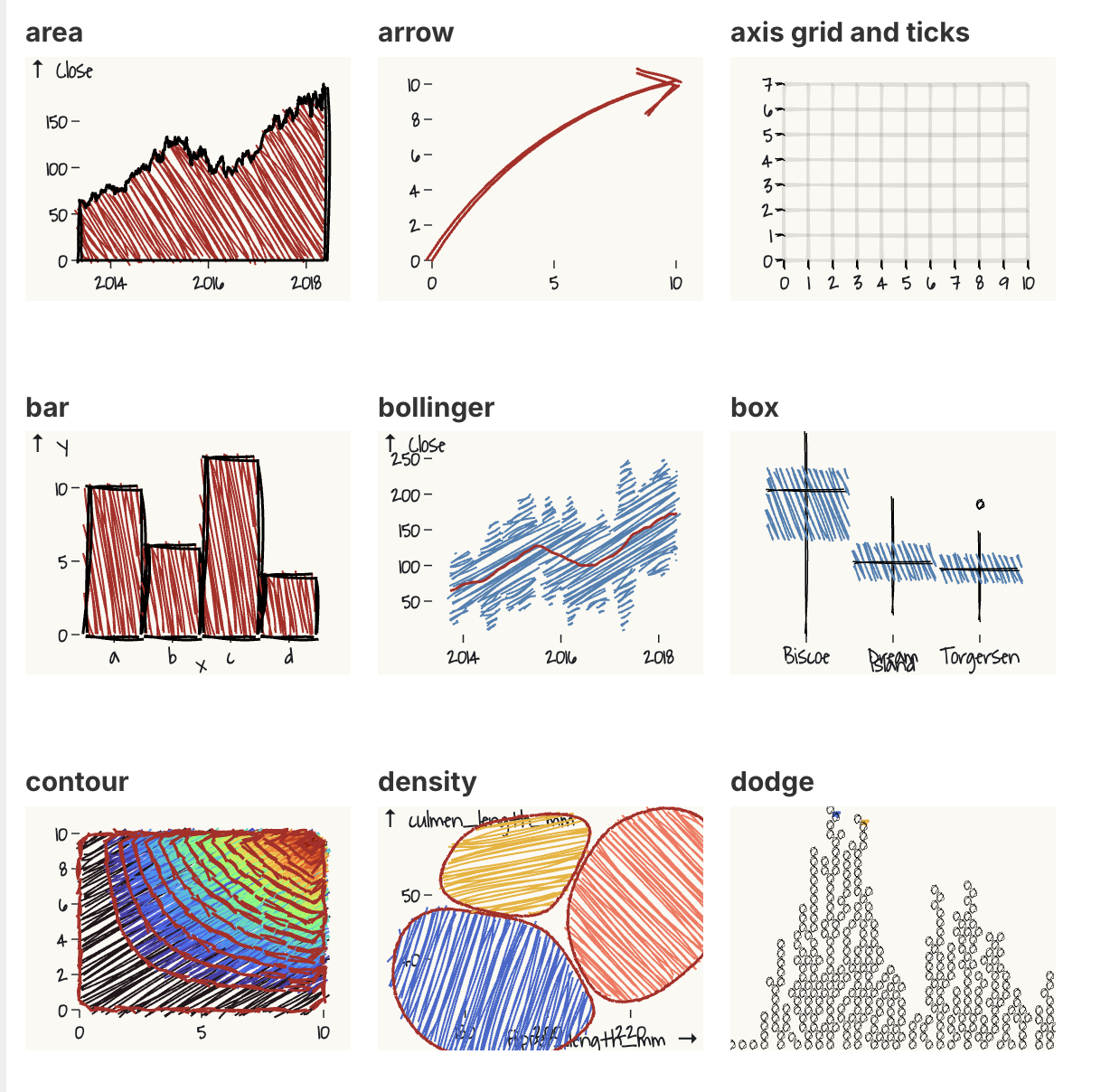
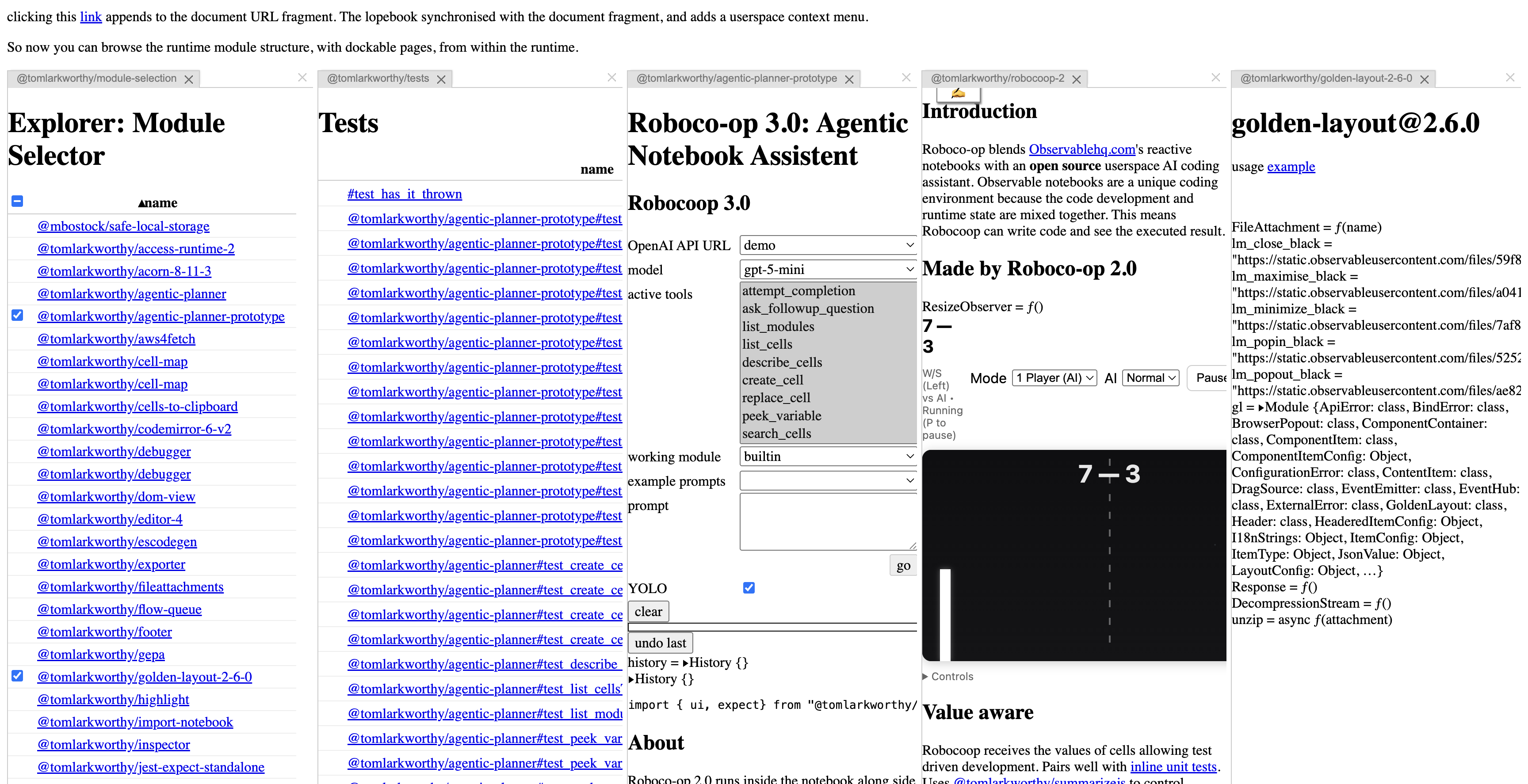
https://observablehq.com/@jwolondon/making-plot-sketchy

πŸ“· image.png

πŸ—¨οΈ daniel g. siegel: πŸ“ Anticipate

🧡 conversation @ 2025-10-21

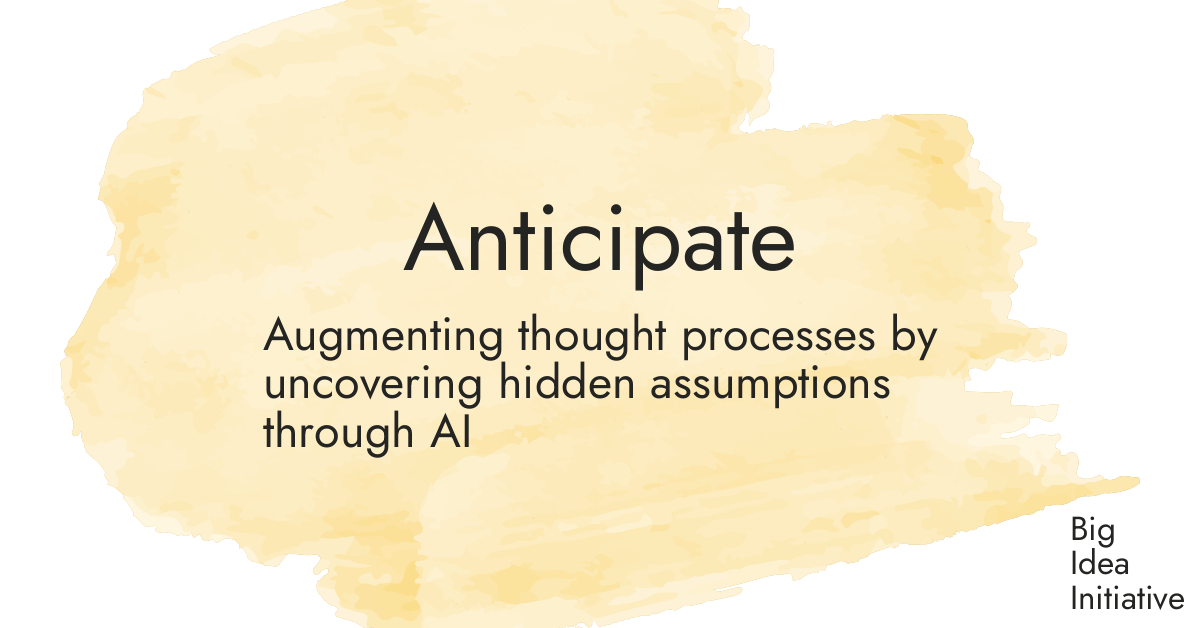
Here's a take on how AI could really benefit and augment our thinking by exploring how it can support reflection and decision making rather than make choices for us: https://www.bigideainitiative.org/ideas/anticipate

This was done by a collaborator of ours, Niklas Muhs.

Anticipate explores how AI can augment design thinking by uncovering hidden assumptions and navigating uncertainty, leading to more informed and creative decisions.

Anticipate

πŸ—¨οΈ Beni Cherniavsky-Paskin:

🧡 conversation @ 2025-10-23

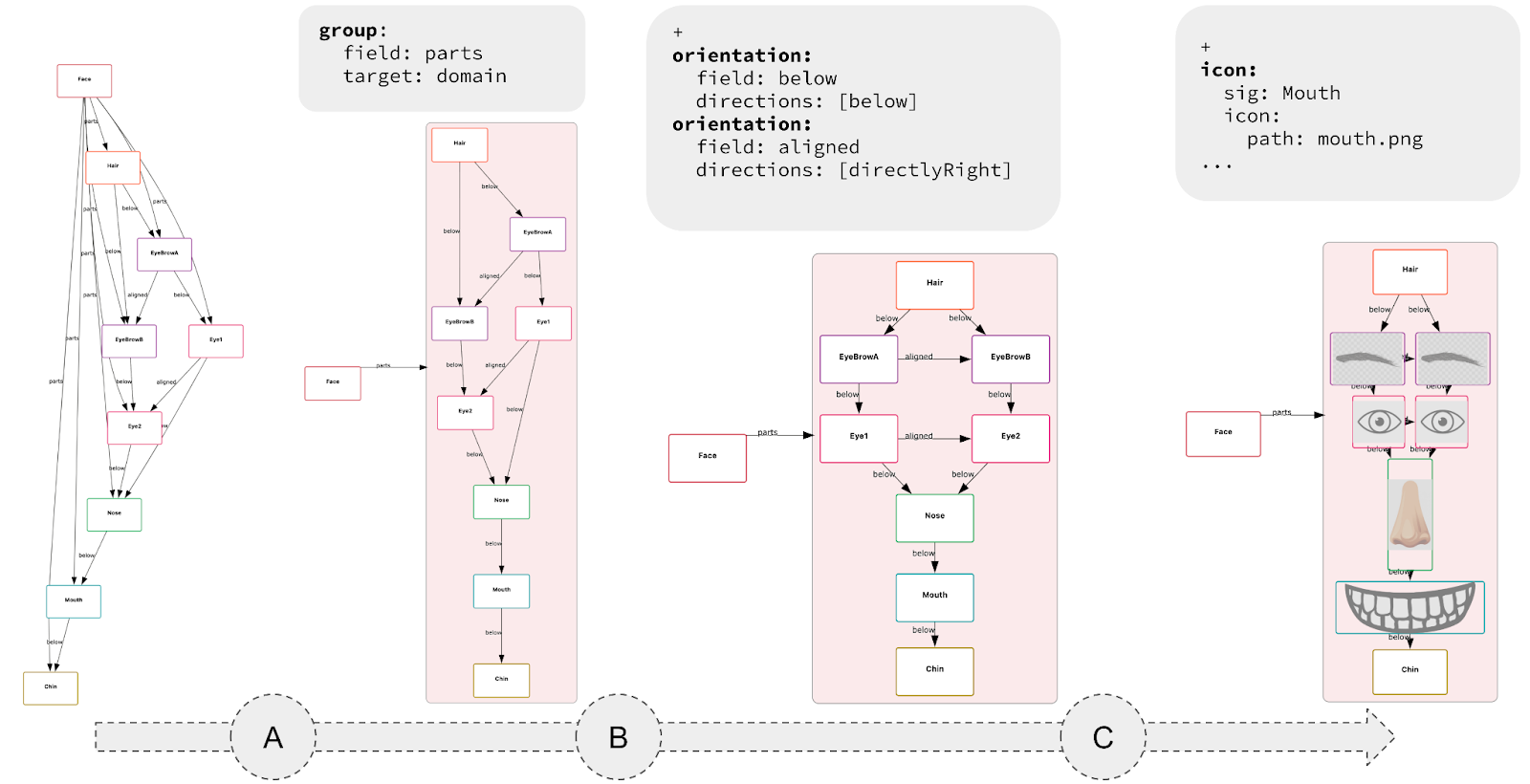
"Cope and Drag" mini language for gradually constraining/improving diagrams 🍰. See paper for details but as usual with PLT blog, the post gives good background.

They built this in context of formal methods, but I think the mixed approach of "user can drag nodes + partially automate via constraints" has wider applicability.

πŸ“· bildo.png

πŸ—¨οΈ Daniel Garcia: πŸŽ₯ ROONS! A new marble computer

🧡 conversation @ 2025-10-26

ROONS! A new marble computer

Present Company

πŸ—¨οΈ Maikel:

🧡 conversation @ 2025-10-24

Next wednesday 29th October is our monthly FoC meetup (see the announcement channel for details).. we still have 2 spots for demo's left, who dares on this special edition?πŸ‘»


πŸ‘¨πŸ½β€πŸ’» By 🐘 @[email protected] 🐦 @warianoguerra

πŸ’¬ Not a member yet? Check the Future of Coding Community

βœ‰οΈ Not subscribed yet? Subscribe to the Newsletter / Archive / RSS

πŸŽ™οΈ Prefer podcasts? check the Future of Coding Podcast

Future of Coding Weekly 2025/10 Week 3

2025-10-20 10:08

🧬 Literate tracing 🧡 Undetermined Weaving with Machines πŸ“‘ Early Interpreters

Share Your Work

πŸ—¨οΈ Mariano Guerra: πŸŽ₯ vibecard: todo app speedrun using macros

🧡 conversation @ 2025-10-17

live coding a todo app faster than the previous one with the help of a new vibecard feature: macros

vibecard: todo app speedrun using macros

πŸ—¨οΈ Matt Curtis: 🌐 Matt Curtis

🧡 conversation @ 2025-10-17

since I'm starting my search for fulltime roles I did something I've managed to avoid doing for years now and made a (dundun) personal website

also trying to make more things that are sort of... just for me, you know?

anyway, idk if any of you have used Astro before (it's sort of similar to Gatsby, if you're familiar with that) but I used it for this and it's pretty neat. near first-class support for turning markdown into pages and querying and sorting collections of markdown. really great if you're building a text-heavy site. plus you can pull in components from your UI framework of choice, like React or Vue.

also got to play with a few SVG/CSS animation features I've never had the chance to fully use in a production site

would love to get any thoughts the folks here have! i feel like personal sites are sort of becoming more rare (might be just me, though)

The personal site of Matt Curtis

Matt Curtis

DevLog Together

πŸ—¨οΈ Tom Larkworthy:

🧡 conversation @ 2025-10-13

One lame issue is Notebook 2.0, it does not support importing other Notebook 2.0s which kinda breaks my plan.
Upvote the feature request here https://github.com/observablehq/notebook-kit/issues/96 (they will do it and its a matter of when)

πŸ—¨οΈ Ivan Reese:

🧡 conversation @ 2025-10-17

Now that FoC stands for "feeling of computing", I can share this β€” I recently built a new website for Automerge, along with the absurdly talented designer Todd Matthews. The site includes an interactive demo and a bunch of illustrations that attempt to give newcomers a sense of what Automerge does. Like, on one level, we say what it does quite directly with words. But I think it's good to also try to, like, show that somehow, even though it's occasionally a bit abstract.

It was a deeply rewarding challenge, coming up with visuals where every detail (dash patterns, directions of lines, use of shapes) had to be both pleasing to look at but also true to the meaning, and consistent with the other meanings.

You can take something technical β€” "everyone has their own copy of the data, changes queue, you sync with your peers, everything converges on a consistent state" β€” and put that into imagery.

Now, of course, I want to actually use the imagery to do the technical thing.

πŸ—¨οΈ Tom Larkworthy:

🧡 conversation @ 2025-10-19

Been thinking how Observable Notebook 2.0 format helps me. I conclude, that kind of transformation should NOT be in the low level. To run Notebook 2.0 you need compilers, but to run Lopecode the format is the low level raw JavaScript so Notebook 2.0 format puts specialised parsers/compilers in the loading path. Compilers and language choices should be in userspace, where they can be changed by the user. So I will revisit Notebook 2.0 when I have fixed the lower layer. I think it be neat as a userspace module.

So I return to where I left off. Bugs in importing from the net. I am redoing the foundational technology. I ditched importmaps and moved over to es-module-shims. It has allowed me to fix a problem that locally loaded models could not be deduped with network imported ones, which ends up causing semantic issues. importmaps are 1-way doors, es-module-shims gives you total control over import semantics at any point in time. Its a really amazing piece of software I recommend learning how it works. It has a C written Lezer parser doing the minimum parsing possible in the fastest possible way to read source code and swap "import" for "importShim" thus enclosing all import calls with a wrapper for customization.

Anyway, in the process I noticed defining the stdlib in the system space was also questionable because half those libs are broken (duckdb) and it takes up 50% of the system overheads for a large amount of extraneous code. Notebook 2.0 redid the stdlib => stdlib is subject to churn. So by a similar argument the stdlib definition should be in userspace too.

I spent a weekend on it and got surprisingly far. I can display some things, es-module-shim dedupuing seems to work and I added a userspace boot module that defines the stdlib and then loads the main module which I think its an improvement and allows the serialization format bootstrap process to be very small (26Kb). In that 26Kb you get a hot swapping reactive runtime and total control over ESM import semantics in a local-file.

πŸ“· image.png

Thinking Together

πŸ—¨οΈ maf:

🧡 conversation @ 2025-10-15

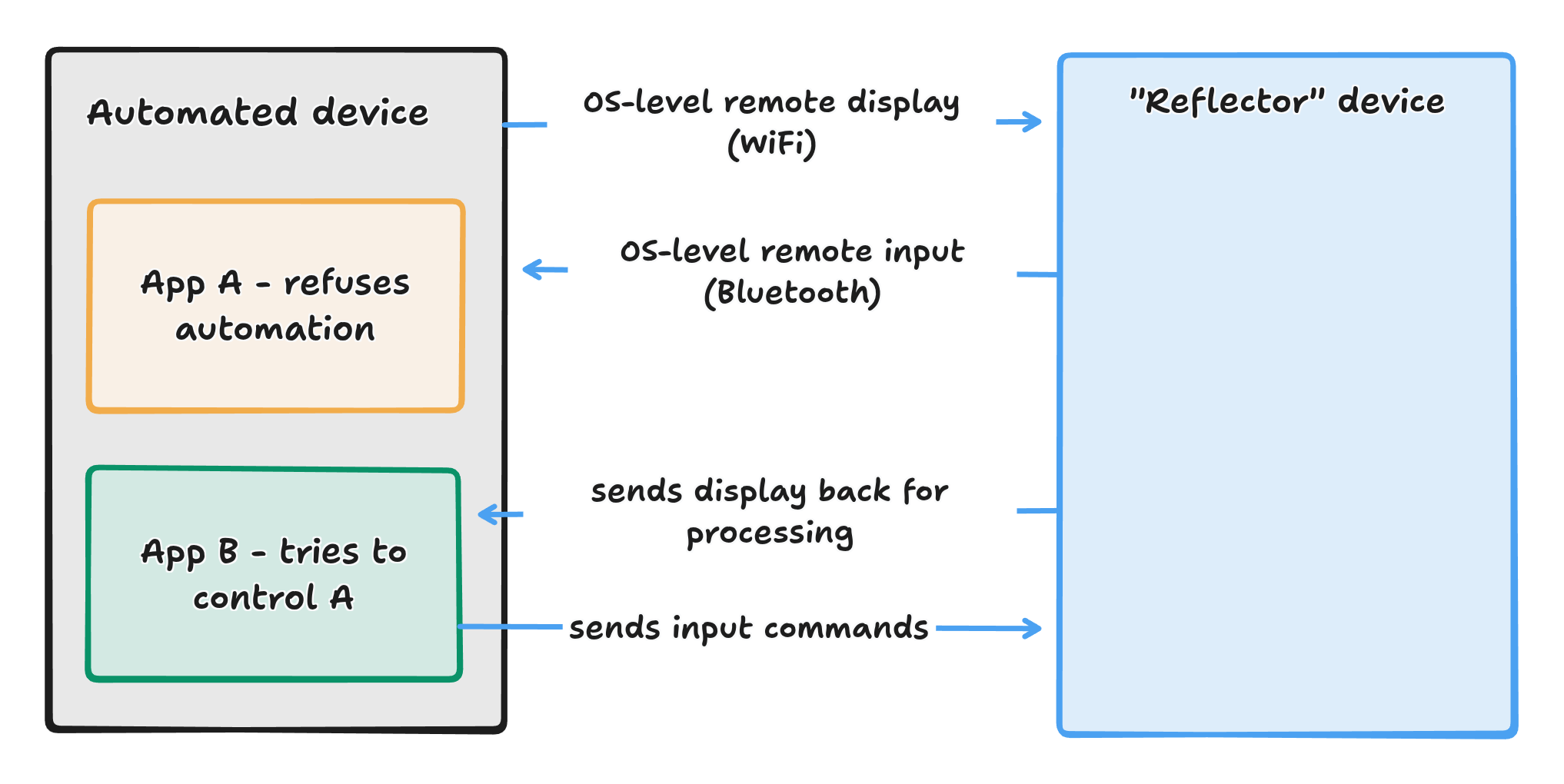
Re adversarial interoperability - just figured out a fun approach. Most devices can share their screen over Miracast / AirPlay / something similar (last resort is HDMI cable). Most devices can also receive input from Bluetooth devices (alternatively, through USB cable). So as an alternative to accessibility APIs (or X11, or WinAPI input injection), one might set up another device that would spoof a Miracast display, a bluetooth mouse & a bluetooth keyboard. Such reflector could be implemented in a very cheap form factor (like a tiny ESP32) and allows another app on the original device to effectively bypass all access controls that the OS-es (especially mobile) impose.

It's not a security vulnerability per-se, since it requires the device owner to cooperate - just an interesting way to interop.

πŸ“· shapes at 25-10-15 19.15.08.png

Linking Together

πŸ—¨οΈ Kartik Agaram:

🧡 conversation @ 2025-10-15

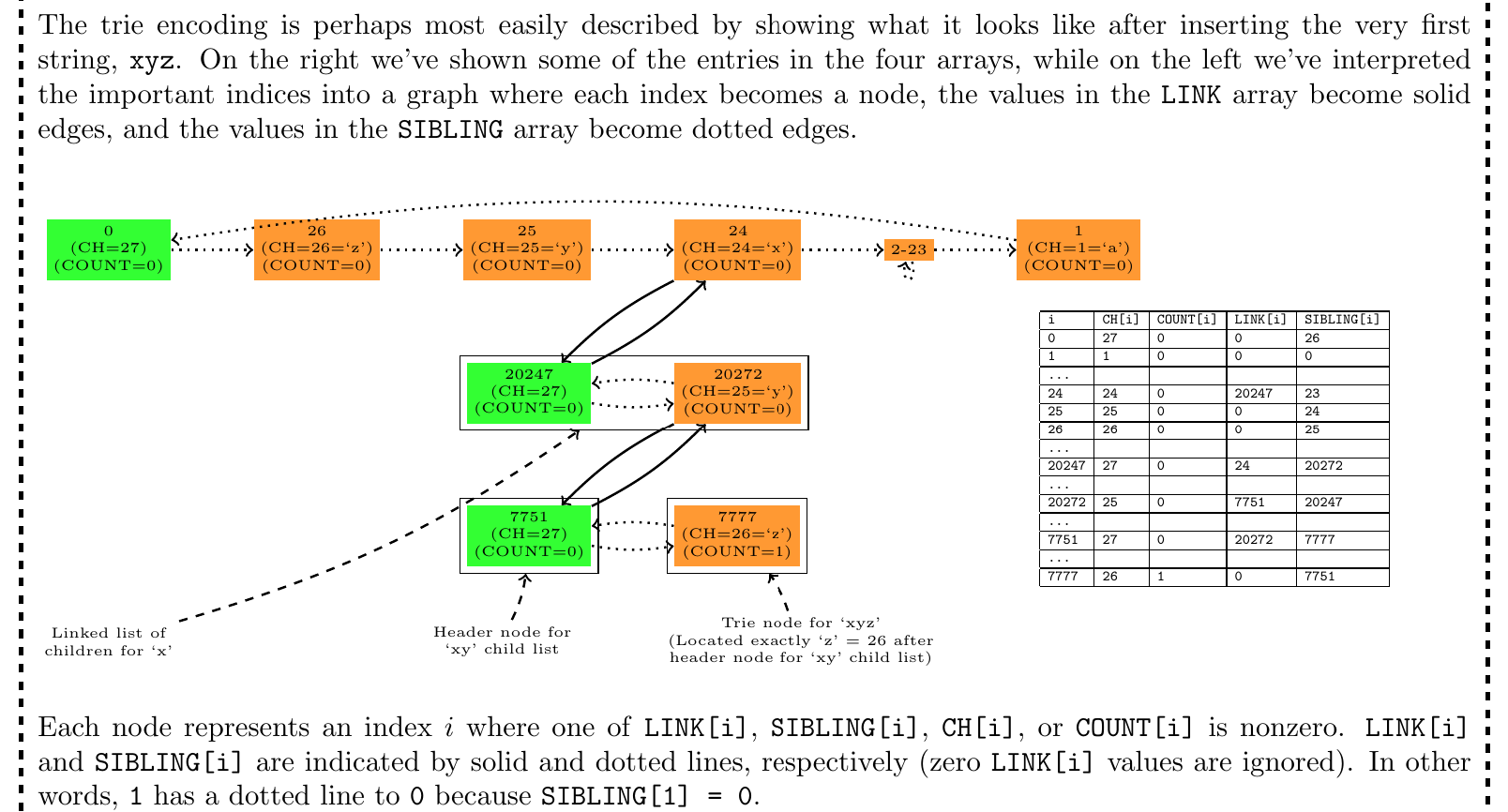
Literate tracing [pdf]

Augments Literate Programming with primitives for running a program on specific inputs and probing the values of specific variables after.

Augments the markup language with some way to define custom pictures. But I can't quite tell what the markup for that looks like.

πŸ“· literate-tracing.png

πŸ—¨οΈ Kartik Agaram: πŸŽ₯ Micro Maker Series: Underdetermined Weaving with Machines

🧡 conversation @ 2025-10-17

Lea Albaugh, "Undetermined Weaving with Machines" [video; 1 hour]

"How do we carve out a chunk of the possibility space of weaving that makes viable and interesting fabrics?"

Paper

Micro Maker Series: Underdetermined Weaving with Machines

πŸ—¨οΈ guitarvydas:

🧡 conversation @ 2025-10-19

Early Interpreters
Smalltalk β€œBlue Book” (esp. Part Four) http://stephane.ducasse.free.fr/FreeBooks/BlueBook/Bluebook.pdf
Tiny Basic (including tiny basic virtual machine) https://archive.org/details/dr_dobbs_journal_vol_01/page/n5/mode/2up
Frits van der Wateren Lisp (Lisp 1.5) (esp. LISP.TXT) https://github.com/guitarvydas/frits-van-der-wateren-lisp
SmallC (strictly not an interpreter, but a compiler (I learned about compilers from this code)) https://archive.org/details/dr_dobbs_journal_vol_05_201803/page/n189/mode/2up, https://github.com/trcwm/smallc_v1

πŸ“ Dr. Dobb's Journal - Vol 1

Collected issues from Volume 1 (1976) of Dr. Dobb’s Journal of COMPUTER Calisthenics & Orthodontia also known as DDJ.A Reference Journal for Users of Home...

Dr. Dobb's Journal - Vol 1 : People's Computer Company : Free Download, Borrow, and Streaming : Internet ArchiveDr. Dobb's Journal - Vol 1 : People's Computer Company : Free Download, Borrow, and Streaming : Internet Archive

πŸ“ Dr. Dobb's Journal - Vol 5

Collected issues from Volume 5 (1980) of Dr. Dobb’s Journal of COMPUTER Calisthenics & Orthodontia also known as DDJ.A Reference Journal for Users of Home...

Dr. Dobb's Journal - Vol 5 : People's Computer Company : Free Download, Borrow, and Streaming : Internet ArchiveDr. Dobb's Journal - Vol 5 : People's Computer Company : Free Download, Borrow, and Streaming : Internet Archive

Contents Β© 2026 Mariano Guerra - Powered by Nikola